In a food processing plant, the air your products breathe matters as much as the surfaces they touch. Choosing the right air handling unit for food industry applications is one of the most important — and most overlooked — food safety decisions a plant owner can make. Airborne bacteria, mould spores, dust and uncontrolled humidity can quietly shorten shelf life, trigger product recalls and lead to failed audits.
This guide explains what an air handling unit (AHU) does in a food plant, what makes a hygienic air handling unit different from a standard one, the requirements of different processing areas, and how the right system supports compliance with FSSAI, HACCP and international food safety standards.
What Is an Air Handling Unit and Why Do Food Plants Need One?
An air handling unit is the heart of a building's air system. It draws in fresh and return air, filters it, cools or heats it, controls its humidity and then distributes it through ductwork to the spaces it serves.
In an office, the goal is comfort. In a food factory, the goal is control. Effective HVAC for food processing plant design has to manage temperature, humidity, air cleanliness, airflow direction and room pressure — all at once, and consistently across every shift. A standard comfort air conditioner simply isn't built for this. It cannot deliver the filtration, pressure control or cleanability that food safety demands.
How Air Quality Affects Food Safety
Airborne Microbial Contamination
Bacteria, yeasts and mould spores travel on dust particles and water droplets. Without proper filtration, they can settle on exposed products, packaging materials and food-contact surfaces. This risk is highest in areas where products are exposed after cooking or pasteurisation, because there is no further step to kill microorganisms.
Humidity, Condensation and Mould Growth
High humidity causes condensation on ceilings, cold pipes and walls. These droplets can drip onto products and create ideal conditions for mould. On the other hand, air that is too dry can affect dough, confectionery and powders. A well-designed AHU keeps humidity within the range each product needs.
Temperature Control and Shelf Life
Many foods are temperature-sensitive during processing and packing. Even small temperature swings can speed up microbial growth, cause chocolate bloom, soften products or affect texture. Stable temperature control protects both product quality and shelf life.
Cross-Contamination Between Raw and Processed Zones
Air moves wherever pressure allows it to. If the air system is not planned properly, air from raw material handling, washing or waste areas can drift into clean packing zones, carrying contaminants and allergens with it.
What Makes an AHU Hygienic?
A hygienic air handling unit is designed so that the unit itself never becomes a source of contamination. Here are the features that set it apart.
Stainless Steel and Corrosion-Resistant Construction
Food plants are washed down frequently and often contain moisture, salts, acids or cleaning chemicals. A stainless steel AHU for food industry use — or one with food-grade coated panels — resists corrosion and does not shed rust or flakes into the airstream.
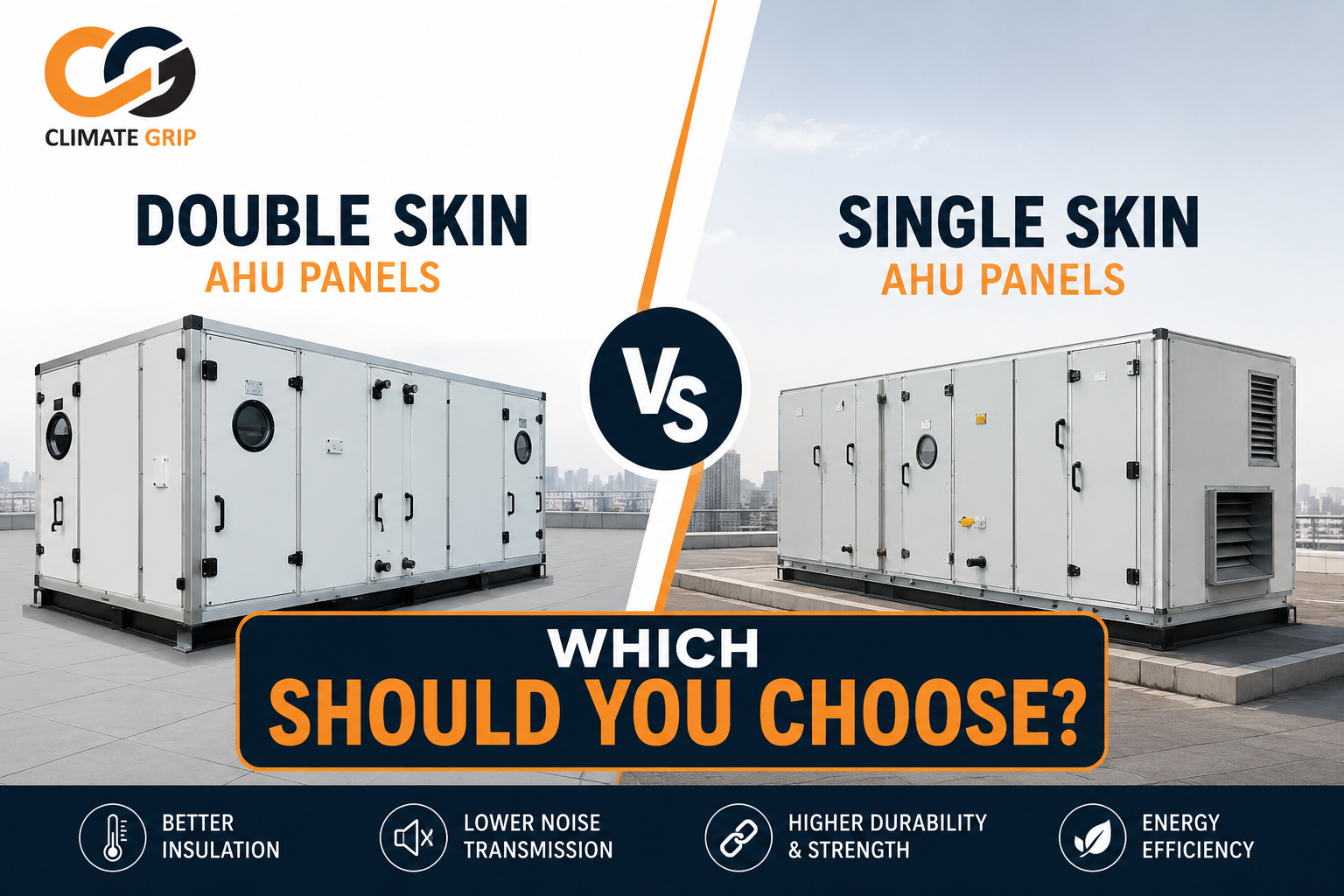
Double-Skin Panels with Smooth, Cleanable Surfaces
Double-skin panels sandwich insulation between two solid sheets, leaving a smooth inner surface with no exposed insulation fibres. This makes the interior easy to wipe and sanitise and prevents dirt from collecting. (Internal link: Double-Skin vs Single-Skin AHU Panels.)
Sloped Drain Pans to Prevent Standing Water
Standing water in a drain pan is a breeding ground for bacteria. Hygienic AHUs use sloped, stainless steel drain pans that empty fully, so no water collects under the cooling coil.
Easy-Access Doors for Cleaning and Inspection
Hinged access doors and enough internal space allow maintenance teams to reach filters, coils, fans and drain pans for regular cleaning and inspection — without dismantling the unit.
Multi-Stage Filtration (Pre, Fine and HEPA)
Air passes through several filter stages. Pre-filters capture coarse dust, fine filters remove smaller particles, and HEPA filters can be added for high-care zones where the strictest air cleanliness is required.
AHU Requirements by Food Processing Area
Different products and process stages need different air conditions. A good AHU design starts with understanding each zone.
Dairy Plants
An AHU for dairy plant applications must handle high humidity from washing and pasteurisation, while protecting filling and packing rooms from airborne contamination. Fine or HEPA filtration and positive pressure are common in filling areas for milk, curd and other cultured products.
Bakery and Confectionery Units
Bakeries need controlled conditions for proofing and cooling, while confectionery and chocolate production depend on tight temperature and humidity control to prevent stickiness, bloom and moisture pick-up. Flour dust must also be captured and kept away from other areas.
Meat, Poultry and Seafood Processing
These plants operate at low temperatures with heavy wash-down routines. They need corrosion-resistant AHUs, effective dehumidification to prevent condensation, and strict separation between raw and cooked areas.
Beverage and Bottling Plants
Filling and capping zones are the most sensitive points in a beverage line. Filtered air at positive pressure around these areas helps prevent airborne contamination of open containers.
Cold Storage and Chilled Packing Rooms
A cold storage air handling unit must keep temperatures stable while managing moisture that enters each time doors open. Good defrost management and dehumidification prevent ice build-up and condensation.
|
Processing Area |
Main Air-Quality Concern |
Recommended Filtration |
|
Dairy filling & packing |
Microbial contamination, humidity |
Fine + HEPA (high-care) |
|
Bakery & confectionery |
Temperature, humidity, flour dust |
Pre + fine |
|
Meat, poultry & seafood |
Condensation, cross-contamination |
Pre + fine, HEPA for RTE packing |
|
Beverage filling |
Contamination of open containers |
Fine + HEPA at filler |
|
Cold storage & chilled packing |
Stable temperature, moisture control |
Pre + fine |
Pressure Zoning: Keeping High-Care Areas Protected
Pressure zoning uses air pressure to control the direction of airflow. The basic rule is simple: air should always flow from cleaner areas to less clean areas.
• High-care and packing zones are kept at positive pressure, so air flows out of them rather than in.
• Raw material, washing and waste areas are kept at negative pressure, so contaminated air stays contained.
• Air locks and pressure-monitoring gauges help maintain these differences and confirm that the system is working as designed.
The AHU supplies the right volumes of filtered air to each zone to create and hold these pressure differences throughout the day.
Compliance Standards Your AHU Should Support
FSSAI Hygiene and Sanitary Requirements
In India, Schedule 4 of the FSS (Licensing and Registration of Food Businesses) Regulations, 2011 sets out general hygienic and sanitary practices for food businesses, including adequate ventilation and protection of food from contamination. Understanding FSSAI HVAC requirements means designing ventilation that prevents condensation, odour, dust and airborne contamination in processing and storage areas.
HACCP and Air as a Potential Contamination Source
HACCP-based food safety plans require businesses to identify hazards across their operations. Air is one possible route for biological and physical contamination, especially in exposed-product areas. A controlled air system helps reduce this risk and supports your HACCP documentation.
ISO 22000 and FSSC 22000 Expectations
These certification schemes require prerequisite programmes that cover the working environment, including air quality and ventilation. A properly designed and maintained AHU makes these requirements easier to meet and demonstrate.
Export Audits and Buyer Requirements
Plants supplying international buyers or large retail chains often face audits such as BRCGS, which expect air quality to be assessed and controlled in high-risk and high-care areas. Investing in the right AHU early can make these audits far smoother.
Energy Efficiency Without Compromising Hygiene
Food plants run long hours, so air handling can be a major part of the energy bill. The good news is that hygiene and efficiency can work together.
• VFDs and EC fans adjust fan speed to the actual demand instead of running at full power all the time.
• Heat recovery wheels and coils reuse energy from exhaust air to pre-condition incoming fresh air.
• Right-sizing airflow (CFM) avoids overcooling and wasted energy while still meeting pressure and air-change needs.
AHU Maintenance Checklist for Food Plants
Even the best AHU can become a contamination risk if it is not maintained. A simple routine keeps it performing safely:
• Filters: check pressure-drop readings regularly and replace filters on schedule or when readings rise.
• Coils and drain pans: clean and sanitise them to prevent biofilm and bacterial growth.
• Fans and belts: inspect for wear, vibration and correct operation.
• Ducts: carry out periodic duct cleaning, especially in dusty processes such as bakeries.
• Air sampling: conduct periodic microbial air sampling in high-care areas to confirm air quality.
• Records: document all maintenance for audits and food safety reviews.
How to Choose the Right AHU Manufacturer for Your Food Plant
Your air handling unit is a long-term investment, so the manufacturer matters. Look for:
• Experience with hygienic and cleanroom AHUs, not just comfort cooling equipment.
• Custom design capability, so the unit fits your layout, process loads and zoning needs.
• Material quality, such as a stainless steel AHU for food industry use or food-grade coated panels.
• Certifications and quality systems that show consistent manufacturing standards.
• Reliable after-sales support, including spares, servicing and technical guidance.
Why Choose Climate Grip for Food-Grade Air Handling Units
Since 2001, Climate Grip has designed and manufactured air handling units for demanding applications across India. As an ISO 9001:2015 certified manufacturer based in Punjab, we build every air handling unit for food industry project around your products, your process and your compliance needs.
• Custom-built hygienic air handling unit designs with double-skin panels and sloped drain pans
• Stainless steel and corrosion-resistant construction options
• Multi-stage filtration, including HEPA for high-care zones
• Cleanroom expertise from pharmaceutical projects, applied to food safety
• Energy-efficient options with VFDs, EC fans and heat recovery
Planning a new food plant or upgrading an existing one? Contact Climate Grip for a free consultation and get an AHU solution designed around your hygiene and compliance goals.
Frequently Asked Questions
What type of AHU is best for a food processing plant?
A hygienic air handling unit is the best choice. It should have stainless steel or food-grade coated panels, double-skin construction, sloped drain pans, easy-access doors and multi-stage filtration suited to each processing zone.
Is HEPA filtration required in food processing?
HEPA filtration is not required in every area, but it is recommended for high-care zones such as ready-to-eat packing, dairy filling and infant food production, where products are exposed after the final kill step.
How does an AHU help with FSSAI compliance?
An AHU controls temperature, humidity and airborne contamination. This supports the hygiene and ventilation practices required for food businesses and helps prevent condensation, dust and odours in processing and storage areas.
What humidity level should be maintained in a food processing area?
There is no single correct level. The right humidity depends on the product and the process stage — dairy, bakery, confectionery and cold storage all have different needs. An expert assessment of each zone is the best starting point.
How often should AHU filters be changed in a food plant?
Pre-filters are usually checked monthly. Fine and HEPA filters are replaced based on pressure-drop readings, the manufacturer's guidance and audit requirements, rather than on a fixed date alone.
What is the difference between a hygienic AHU and a standard AHU?
A standard AHU is designed mainly for comfort cooling. A hygienic AHU is built for cleanability and contamination control, with smooth inner surfaces, corrosion-resistant materials, fully draining pans and higher-grade filtration.
Can one AHU serve both raw and processed food zones?
This is not recommended. Raw and processed zones should be served by separate AHUs, or at least carefully zoned with pressure control, to prevent cross-contamination between them.
Conclusion
In food processing, air quality is a food safety control, not just a comfort feature. The right air handling unit for food industry use protects your products from contamination, keeps temperature and humidity stable, supports FSSAI and international compliance, and helps you pass audits with confidence.
Whether you run a dairy, bakery, meat plant, beverage line or cold storage facility, Climate Grip can design an AHU that fits your process. Get in touch today for a free consultation.