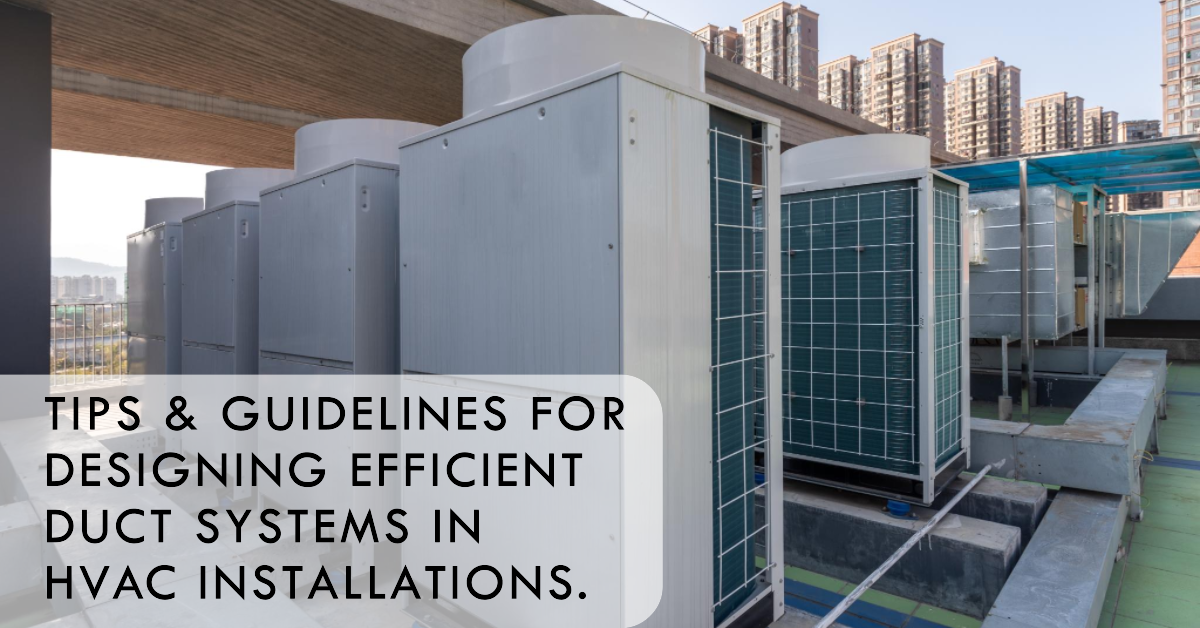
Efficient HVAC system ducts and HVAC maintenance are essential for top-notch heating, ventilation, and air conditioning performance. They boost energy efficiency, enhance indoor air quality, and improve occupant comfort. Here are vital tips for designing them:
Calculate the Load Requirements:
It’s crucial to ascertain the building’s heating and cooling load requirements before developing a duct system. Elements such as building size, insulation, occupancy, and regional climatic conditions influence these load predictions. Correct duct sizing and equipment selection depend on accurate load estimations.
Choose the Right Duct Material:
Duct material choice is crucial; options include sheet metal, fiberglass duct board, flex duct, and ductless mini-split systems. Selection depends on cost, space, and HVAC requirements, with compliance with local codes essential.
Optimize Duct Sizing:
Proper duct sizing is vital for energy efficiency and balanced airflow. Undersized ducts reduce airflow and efficiency, while oversized ones increase energy consumption. Consult HVAC load calculations and standards for accurate sizing.
Design for Proper Airflow Distribution:
Plan the duct layout to ensure even distribution of conditioned air to all areas of the building. Well-sized and strategically placed vents ensure temperature consistency and minimize hot or cold spots. Use manual D duct design software or equivalent tools for precision.
Minimize Duct Length and Bends:
Make duct runs as brief and straight as you can. Reducing the length and the number of bends and turns in the ductwork decreases air resistance and pressure drops. It minimizes the workload on the HVAC system’s fan, improving energy efficiency.
Seal Duct Joints and Connections:
Leaky ducting can bring about significant energy losses and reduce system effectiveness. Ensure that you adequately seal all connections and joints with mastic or tape that has received UL-181 approval to prevent air leakage. To avoid moisture and heat transfer, ducts should also be insulated.
Consider Zoning:
Implementing zoning in Larger buildings can help optimize HVAC efficiency. Zoning divides the building into different areas with independent temperature control. It allows for more precise conditioning of individual spaces, reducing energy consumption when certain areas are unoccupied or require different temperatures.
Install Vibration Isolators and Dampers:
Use vibration isolators and dampers in the duct system to lessen noise and vibrations brought on by the HVAC system. These parts also increase equipment longevity while also enhancing occupant comfort.
Regular Maintenance and Inspections:
Even a well-designed duct system can become inefficient if not properly maintained. Regularly inspect ductwork for damage, leaks, and blockages. Clean or replace air filters, as dirty filters can restrict airflow and reduce efficiency.
Consult with HVAC Professionals:
Complex or large-scale HVAC installations may benefit from the expertise of HVAC professionals and engineers. They can perform load calculations, design duct systems, and oversee the installation to ensure efficiency and compliance with local regulations.
Test and Balance the System:
After installation, perform air balancing to fine-tune the system’s performance. This process involves adjusting dampers and airflow rates to achieve the desired conditions in each space while ensuring even pressure distribution.
Climate Grip significantly enhances the design of efficient HVAC systems ducts and HVAC maintenance through real-time data monitoring, intelligent fan control, specialized software for complex systems, compliance with energy efficiency standards, and a focus on sustainability. By integrating advanced sensors and monitoring systems into HVAC setups, Climate Grip provides real-time insights into airflow rates, pressure variations, and temperature changes within duct systems, aiding designers in optimizing layouts for peak efficiency. Their intelligent fan control systems dynamically adjust fan speeds and airflow distribution based on real-time data, improving energy efficiency and ensuring balanced airflow.
Conclusion:
Efficient duct systems are vital for top HVAC performance, including HVAC maintenance. Implementing the guidelines and tips outlined, from accurate load requirements calculation to proper duct material selection and sizing, ensures energy efficiency, superior indoor air quality, and enhanced occupant comfort. It’s imperative to design for Proper airflow distribution, minimize duct length and bends, and seal joints to prevent energy losses. Zoning, vibration isolators, regular maintenance, and compliance with codes and standards are all crucial elements.